
The complete architecture of The Adult in the Room, from internal safety to external leadership
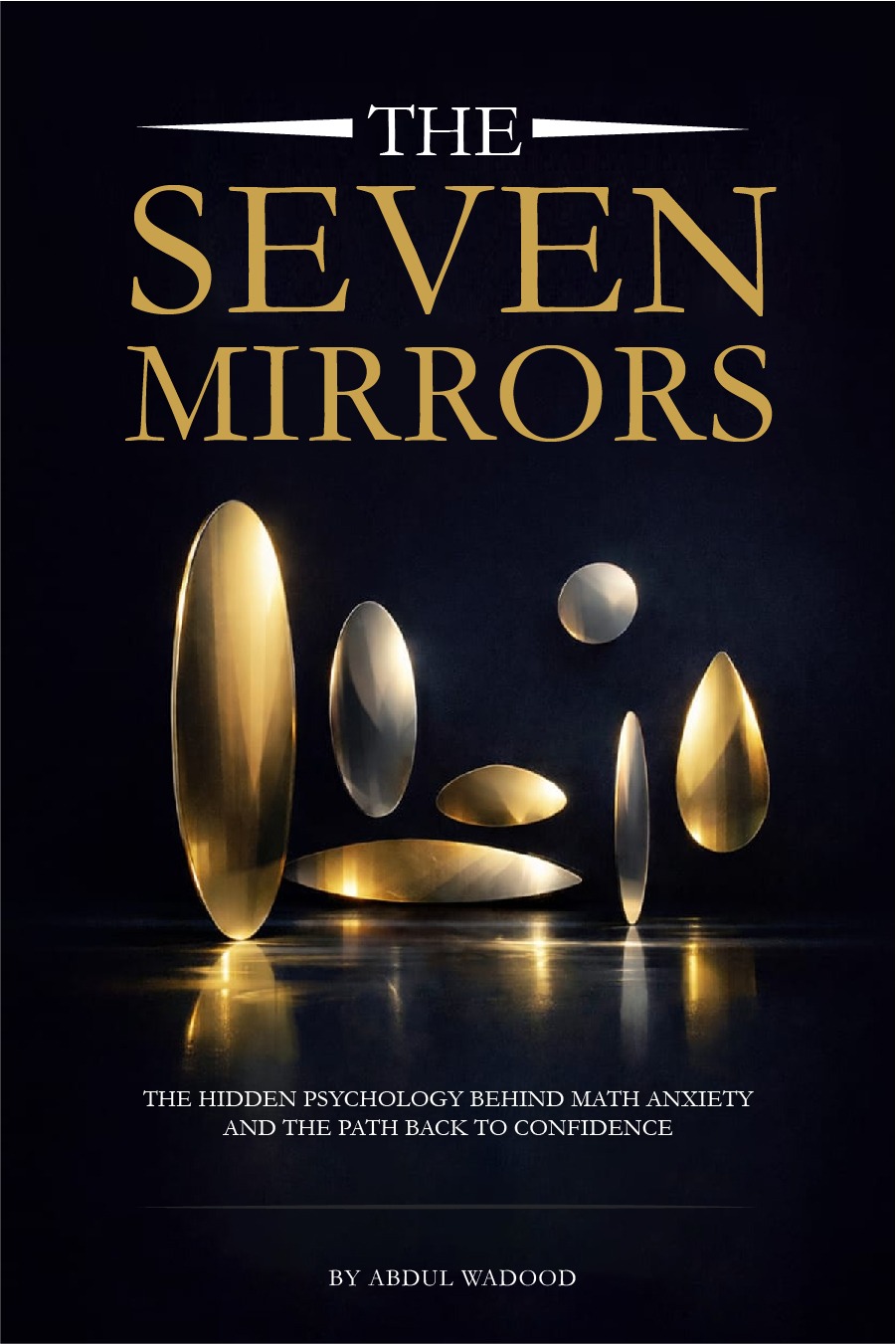
A Quiet Intervention for Overcoming Math Anxiety Most students do not struggle with mathematics because of intelligence. They struggle because their relationship with thinking has been quietly disrupted. The Seven Mirrors reveals the psychological patterns that shape how students see themselves as learners. Fear, self doubt, perfectionism, and avoidance form a system that limits performance long before ability is tested. Through seven reflections, the book helps readers recognize these patterns and understand how they influence thinking. Once a pattern is seen clearly, it begins to lose its control. This is not a book about formulas. It is about restoring the ability to engage with mathematics without fear.
 ▼
▼

The Intelligence Behind the Intelligence: The Mathematics Powering Every AI Decision
In 2018, Amazon shut down an AI hiring system that had spent four years learning to discriminate against women. The mathematics worked perfectly. That was the problem.
Every week, senior professionals approve AI systems they do not fully understand. They sit in meetings where data science teams present their models. The metrics look strong. The team is confident. The project is approved. And then the model fails. Not randomly. In ways that were mathematically foreseeable by anyone who knew what to look for.
This book was written for the executive, director, or senior manager who makes decisions about AI systems but has been excluded from understanding the mathematics underneath them. You will not derive a formula. You will not write a single line of code. You will learn something harder and more valuable: what the mathematics actually means, what it leaves out, and precisely when to push back.
Every chapter is built around one essential question about how AI actually works. What is a loss function really optimizing for, and what is it silently ignoring? Are the model’s confidence scores true probabilities, or are they rankings dressed up as certainty? What important variables are absent from the training data, and what proxy is the model using in their place? Where does the mathematics stop and the human judgment begin?
The entire book is anchored in one documented real-world case: the Amazon AI hiring tool that systematically produced biased outcomes for four years while its internal metrics showed excellent performance. Chapter by chapter, you will understand exactly how that failure happened and how the right questions, asked at the right moment, would have caught it before deployment.
By the final page, you will have four questions that compress the entire field of AI mathematics into a governance framework you can apply in any boardroom or management meeting. You will have ten specific demands to make of any data science team before you approve any model for deployment. And you will have the exact language to use when a team presents metrics that look strong but conceal deeper problems.
No formulas. No coding. No jargon left unexplained.
This is not a book about becoming a data scientist. It is a book about becoming the most mathematically literate non-mathematician in every room you enter.
Available on Amazon in ebook and paperback.
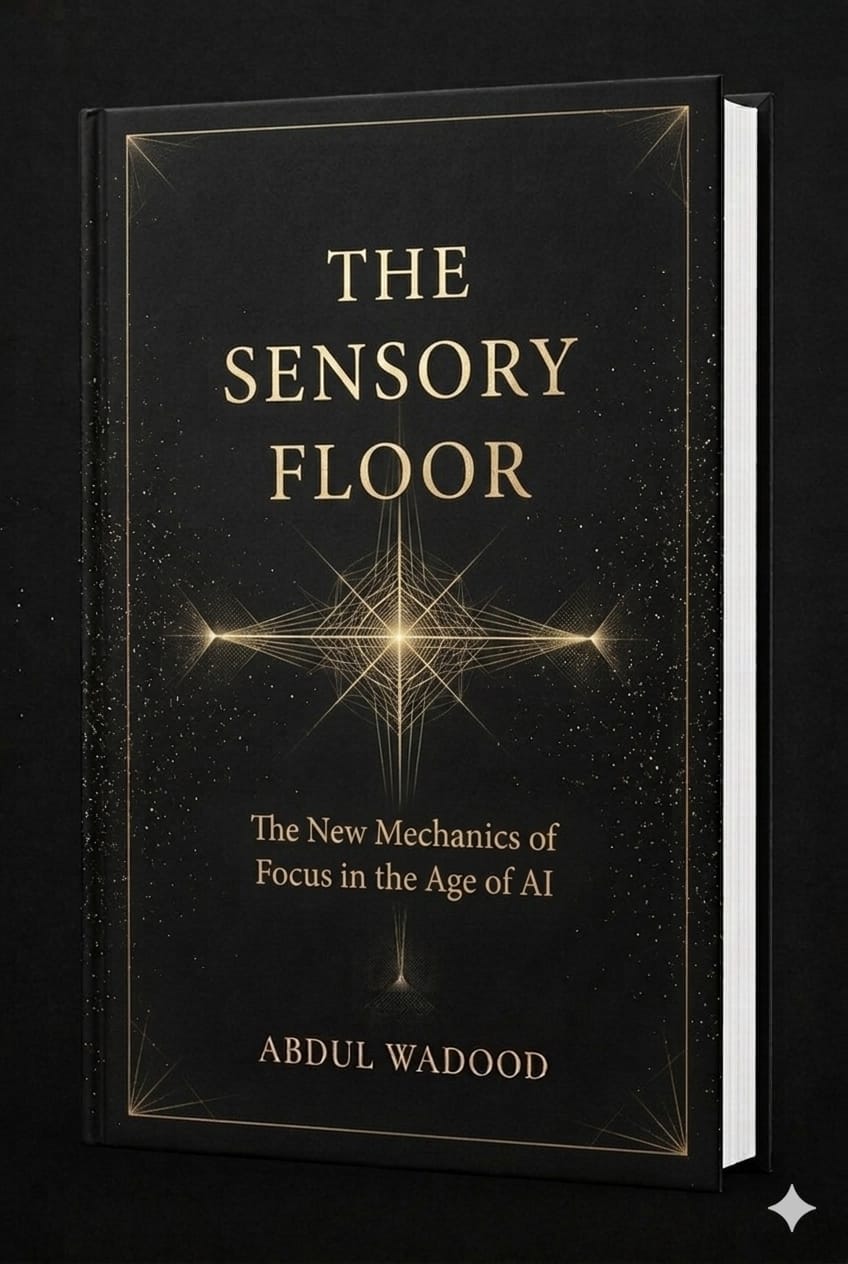
The New Mechanics of Focus in the Age of AI
We are living in the age of effortless information. Answers arrive instantly, distractions multiply endlessly, and digital systems compete continuously for our attention. Yet as the world becomes easier to navigate, our inner landscape becomes harder to inhabit. The Sensory Floor introduces a new way of understanding focus. Instead of viewing concentration as something we push upward through effort, the book argues that focus is determined by a baseline The Sensory Floor created by our environment and habits.
When that floor rises too high, deep thinking becomes nearly impossible.
Through a structured 21-day protocol, the book helps readers systematically lower this floor and rebuild the conditions necessary for sustained attention and intellectual depth.
The Identity Trap
Why Math Feels Hard and What the Psychology of Learning Can Do About It

The Identity Trap Why Math Feels Hard and What the Psychology of Learning Can Do About It By Abdul Wadood
A student solves three problems correctly. He looks at the work. Then he asks his teacher: “Sir, am I improving?” The evidence is sitting directly in front of him. He cannot believe it.
This moment, witnessed across twenty-five years of teaching mathematics, is the subject of this book.
The Identity Trap is not a study guide. It does not promise that mathematics will become easy. What it promises is more valuable: a precise psychological explanation of why capable students fail before they even begin, and what parents, teachers, and students can actually do about it.
What You Will Discover
The Identity Trap: Why capable students become loyal to an old story about being incapable, and why that story actively resists evidence of improvement.
The Borrowed Mind: What happens when students outsource thinking to AI tools and worked solutions. The feeling of understanding is real. The understanding itself is not.
The Confidence Lag: Why performance improves weeks before confidence catches up, and why students interpret this gap as proof that their progress is not real.
The Finish Line Trap: Why students stop just before completion, not from laziness but because finishing would permanently disprove the old story they carry about themselves.
The Error Log: A practical tool for turning repeated mistakes into targeted learning, converting every error from a source of shame into a source of information.
Who This Book Is For
For parents watching a capable child stop trying and not understanding why.
For students who know the material but freeze under pressure, or who solve problems correctly and immediately doubt the solution.
For teachers and tutors who have seen the light go out in a student’s eyes and wondered what happened long before that child arrived in their classroom.
Students do not fail because they are incapable. They fail because they are loyal to an old story about being incapable. That story can be rewritten.
Format: Kindle and Paperback ISBN: 9798188962593
▼
The Last Skill: Thinking for Yourself in the Age of AI
by Abdul Wadood
Something is changing in how we think. Not dramatically. Not through any single decision. Gradually, through small conveniences, each one making independent thought slightly less necessary than it was before.
This book is about that shift.
The Last Skill is not a book about artificial intelligence. It is not about productivity or how to think faster. It is about what happens to human thinking when the effort of thinking becomes optional, and what remains when that effort is consistently removed.
Drawing on more than twenty-five years of teaching mathematics across GCSE, A-Level, IB, and university levels, including over two decades in the UAE, Abdul Wadood identifies seven cognitive capacities, called the Seven Gates, that define what it means to think independently. Framing. Restraint. Interpretation. Moral Weight. Originality. Revision. Attention. These are not frameworks or techniques. They are disciplines that cannot be automated, cannot be outsourced, and cannot be easily recovered once the habit of practising them is lost.
This book is for anyone who suspects that something in how they think has quietly changed, and who is not yet ready to accept that change as inevitable.
The Last Skill is available now on Amazon in paperback and Kindle editions.
Abdul Wadood | abdulwadood.org
▼
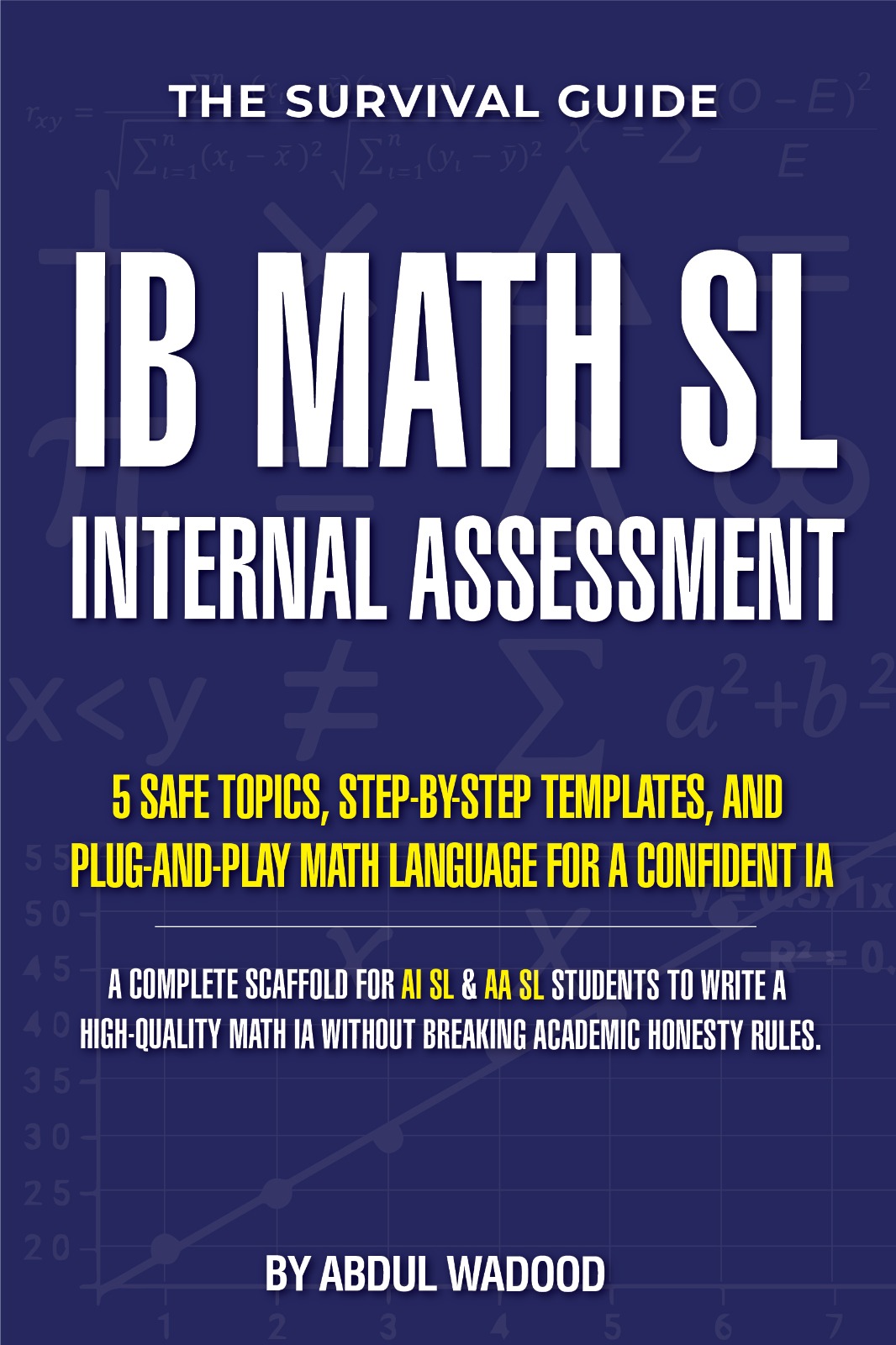
The Survival Guide for the IA
The Internal Assessment is one of the most confusing parts of the IB Mathematics course. Many capable students lose marks not because they lack ability, but because they lack a clear structure.
This guide provides a proven, IB-aligned framework for navigating the IA process from topic selection to final submission. It includes safe topic ideas, step-by-step structural templates, and practical guidance for communicating mathematical reasoning clearly.
The focus is on helping students produce high-quality work while maintaining full academic integrity.
For IB students, the IA does not have to be a mystery.
With the right structure, it becomes manageable
▼
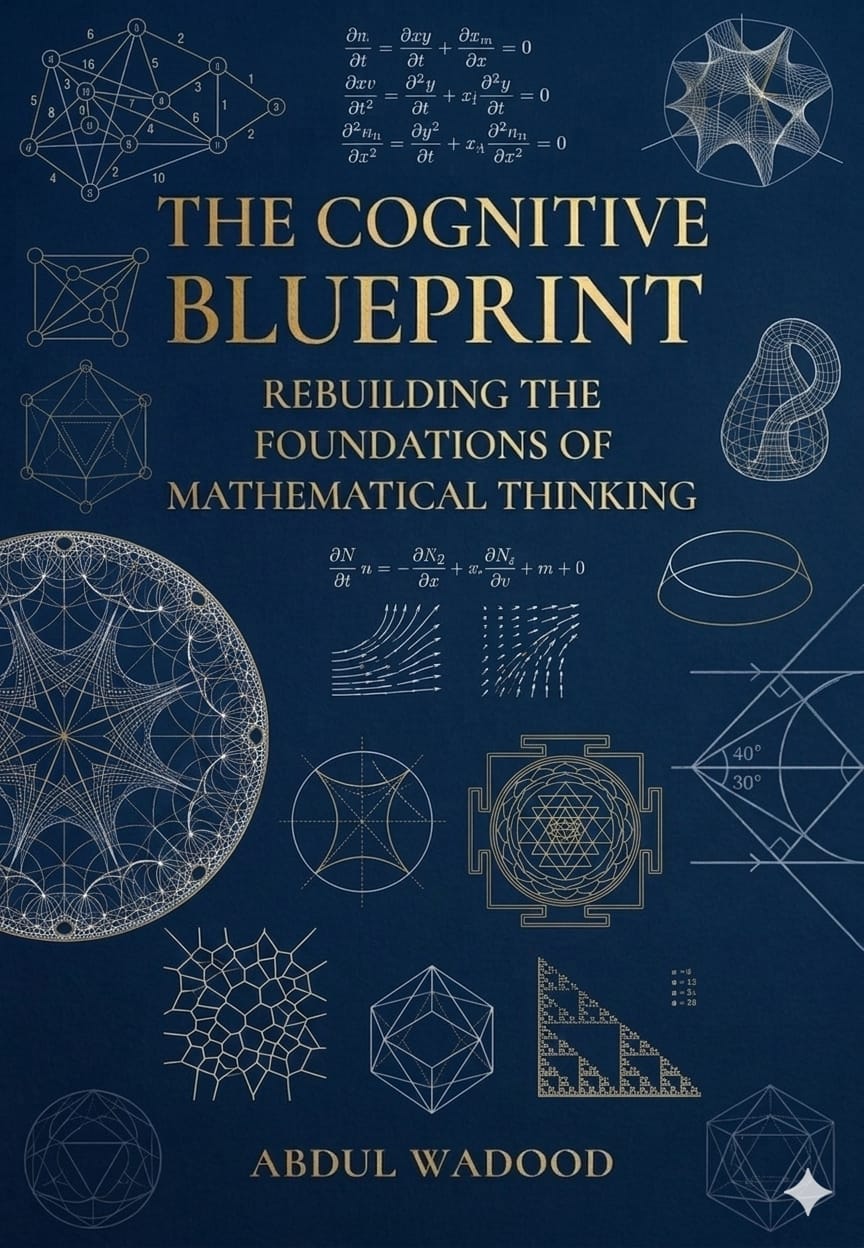
Rebuilding the Foundations of Mathematical Thinking
If The Seven Mirrors identifies the psychological barriers surrounding mathematics, The Cognitive Blueprint focuses on the path forward.
Once fear is recognized, the question becomes practical: how does a learner rebuild their relationship with mathematical thinking?
This book provides a navigational framework for restoring intellectual confidence. It explores how the brain naturally seeks patterns, how the learning environment shapes mathematical identity, and how complex problems can be reconstructed into simple, approachable structures.
In the age of automated calculation, the true human advantage in mathematics is not speed.
It is clarity of thought and sovereignty of reasoning.
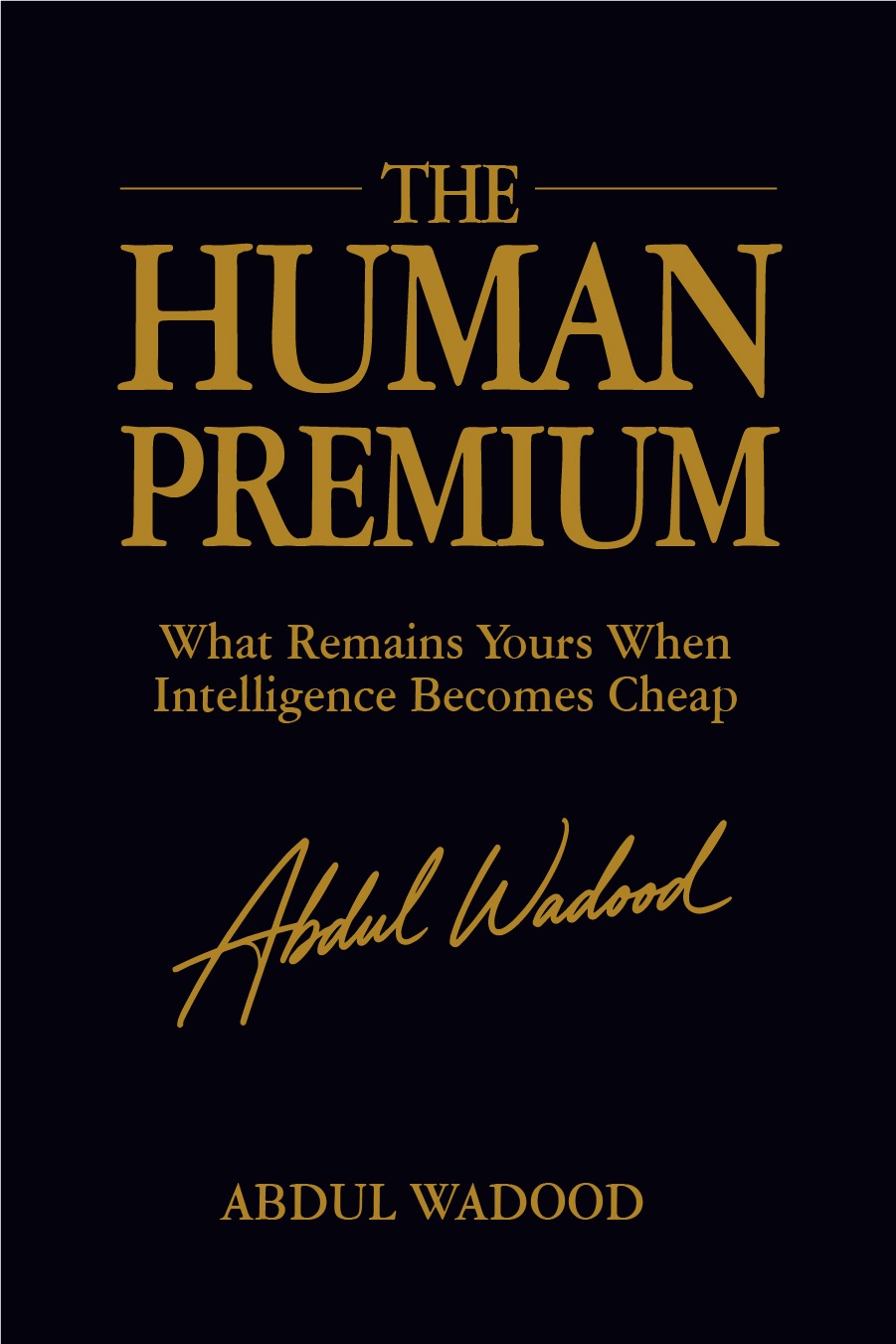
In a world where machines can write, think, and decide with increasing speed, a deeper question emerges.
What remains uniquely human?
The Human Premium is not a guide to AI tools. It is a framework for understanding what cannot be automated.
As work becomes faster and more efficient, something quieter begins to disappear.
Judgment weakens. Presence fades. Responsibility becomes diffuse.
This book names that shift.
At its core are seven human “moats” that machines cannot inherit: judgment, ethics, empathy, sensemaking, taste, creative divergence, and learning velocity.
These are not skills to acquire.They are capacities to protect.
The book draws a clear distinction between two emerging roles:
the Functionary, who follows the system, and the Architect, who defines it.
In the age of AI, output is abundant.
Clarity is rare.
Presence is irreplaceable.
This is a book about work, but also about something deeper.
When the tools can do almost everything for you, who do you still choose to be?
▼

Every week, senior professionals approve AI systems they do not fully understand. They sit in meetings where data science teams present their models. The metrics look strong. The team is confident. The budget gets approved. And months later, the system fails in ways that were mathematically foreseeable by anyone who knew what to look for.
This book was written for the executive, director, or senior manager who makes decisions about AI systems but has been excluded from understanding the mathematics underneath them. Anchored in one documented real-world case, the Amazon AI hiring tool that systematically produced biased outcomes for four years while its internal metrics showed excellent performance, every chapter builds toward a single outcome: the ability to lead AI decisions rather than simply sign off on them.
By the final page, you will have four questions that compress the entire field of AI mathematics into a governance framework you can apply in any boardroom meeting, ten specific demands to make of any data science team before you approve any model for deployment, and the exact language to use when a team presents metrics that look strong but conceal deeper problems.
No formulas. No coding. No jargon left unexplained. Written for CEOs, managing directors, VPs, strategic managers, planning directors, and anyone in a position of leadership where AI decisions land on their desk.
▼
A structured 30-day rescue system for GCSE and IGCSE Mathematics students. Six books, one for each major exam board. Built from 25 years of classroom experience.
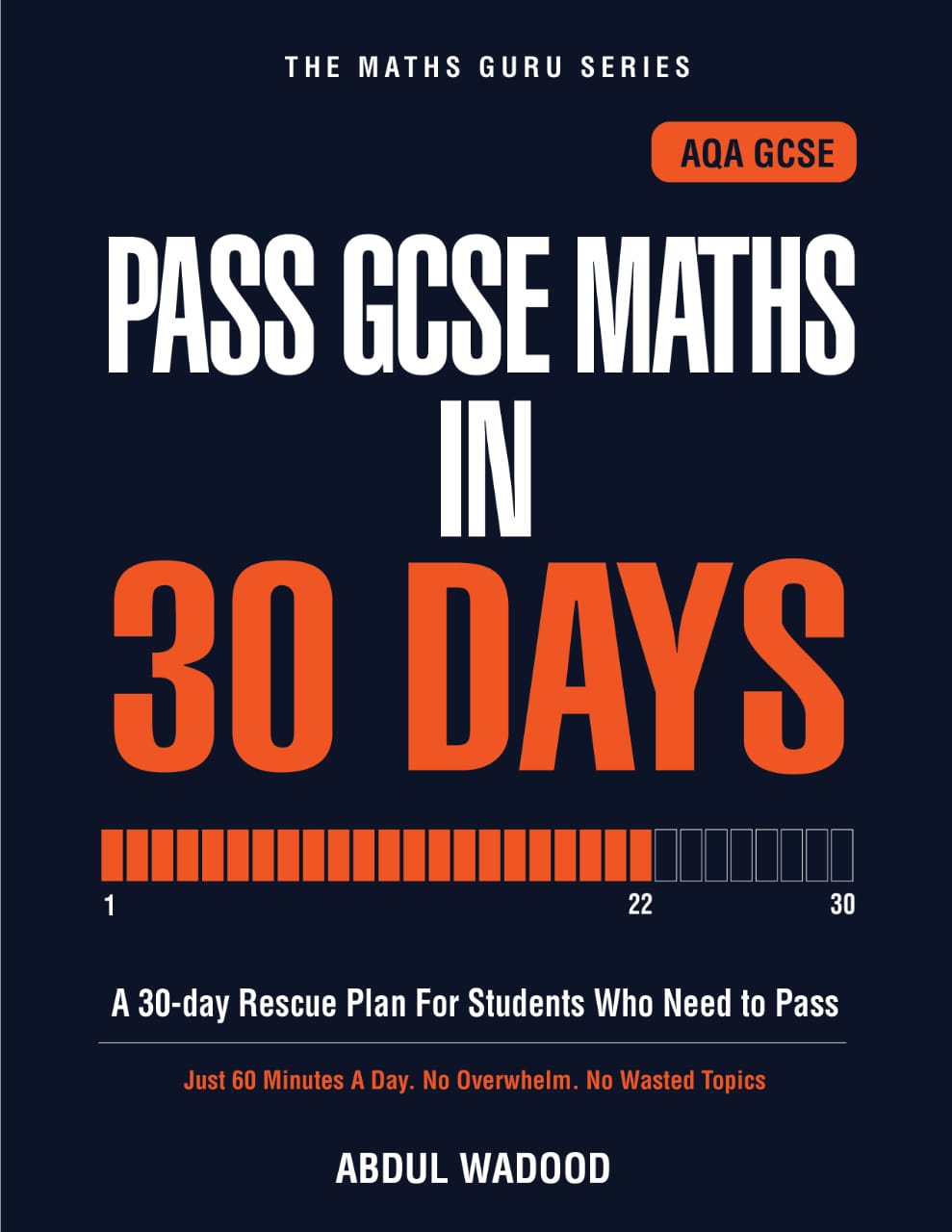
Pass GCSE Maths in 30 Days — AQA GCSE
Most students do not fail mathematics because they lack ability. They fail because they revise randomly, run out of time, and have no clear system when the exam approaches.
This book provides exactly that system.
Pass GCSE Maths in 30 Days for AQA gives every student a structured daily plan that removes all the guesswork. Sixty minutes a day. Thirty days. One clear path to passing the AQA GCSE Mathematics exam.
The Guru Rule method gives one clear rule per topic so nothing is forgotten under pressure. The 5-Second Recall system builds instant memory tools for exam day. Exam trap warnings show the exact mistakes that cost students marks across AQA Papers 1, 2 and 3.
Two full AQA-style mock exams with complete mark schemes are included.
This is not a revision guide. It is a rescue plan.
▼
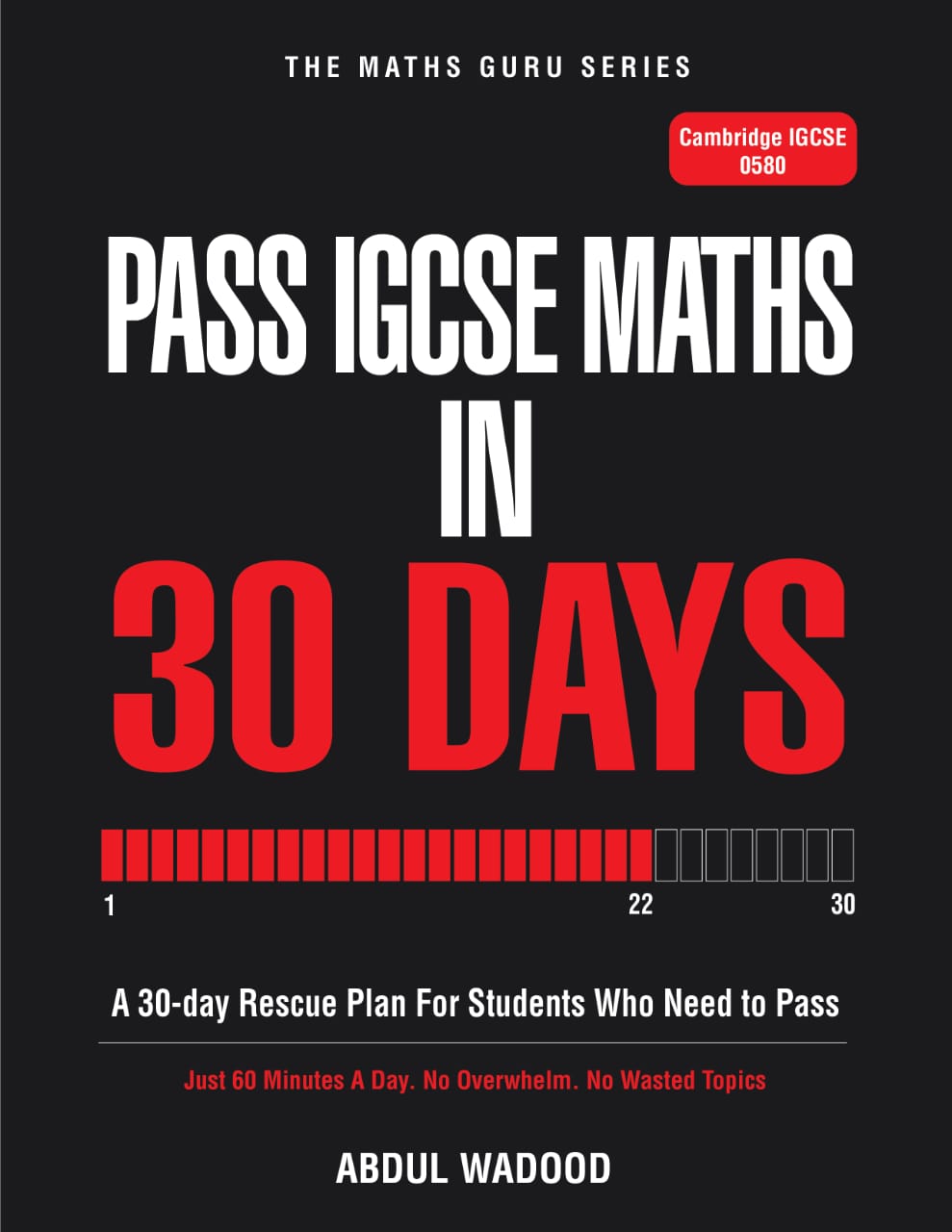
Most students do not fail mathematics because they lack ability. They fail because they revise randomly, run out of time, and have no clear system when the exam approaches.
This book provides exactly that system.
Pass Cambridge IGCSE Maths in 30 Days for 0580 gives every student a structured daily plan that removes all the guesswork. Sixty minutes a day. Thirty days. One clear path to achieving a strong pass in Cambridge IGCSE Mathematics 0580.
The Guru Rule method gives one clear rule per topic so nothing is forgotten under pressure. The 5-Second Recall system builds instant memory tools for exam day. Bearings, reciprocal graphs, and function notation are fully covered. Exam trap warnings show the exact mistakes that cost students marks in Cambridge paper conditions.
Two full Cambridge-style mock exams with complete mark schemes are included.
This is not a revision guide. It is a rescue plan.
▼
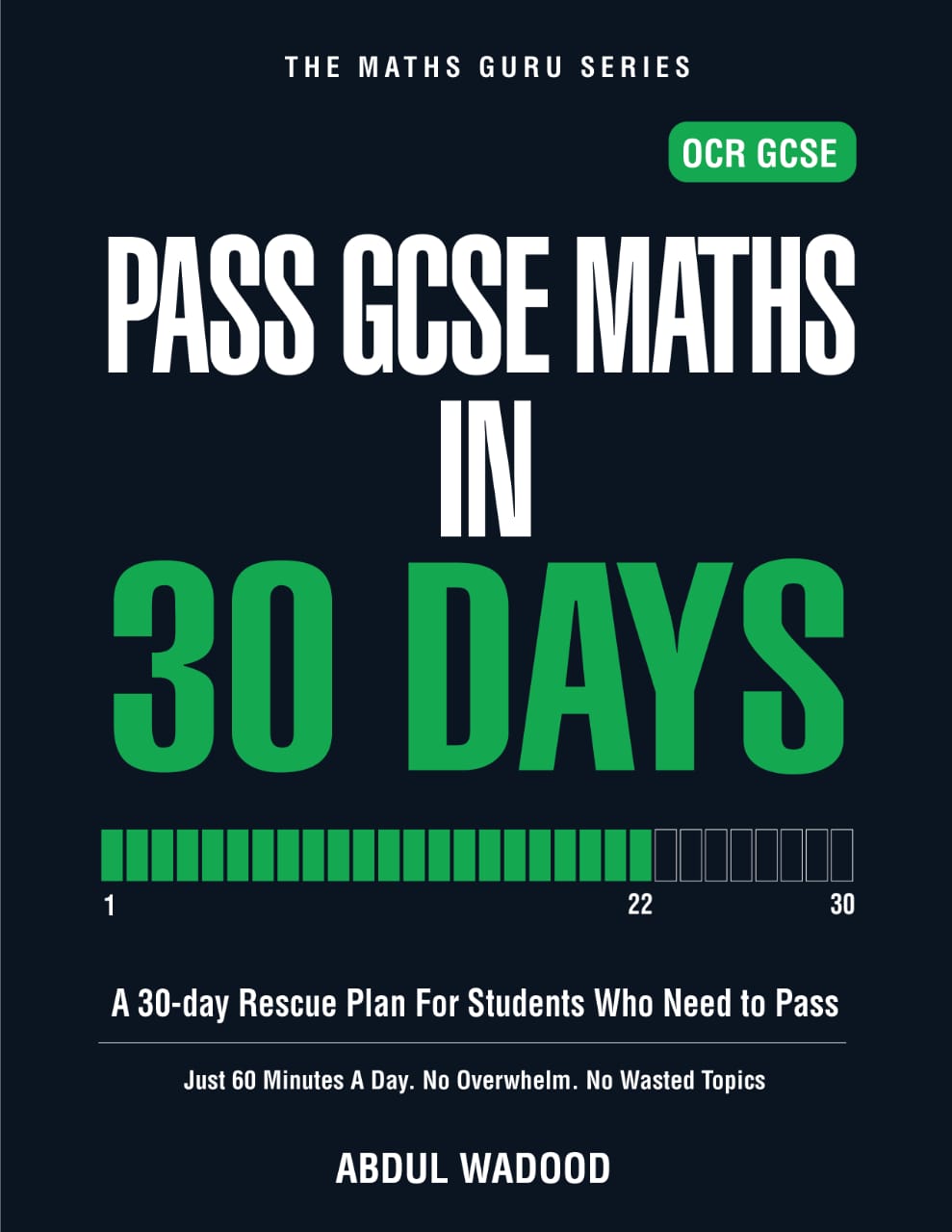
Most students do not fail mathematics because they lack ability. They fail because they revise randomly, run out of time, and have no clear system when the exam approaches.
This book provides exactly that system.
Pass GCSE Maths in 30 Days for OCR gives every student a structured daily plan that removes all the guesswork. Sixty minutes a day. Thirty days. One clear path to passing the OCR GCSE Mathematics exam.
The Guru Rule method gives one clear rule per topic so nothing is forgotten under pressure. The 5-Second Recall system builds instant memory tools for exam day. Exam trap warnings show the exact mistakes that cost students marks across OCR Papers 1, 2 and 3.
Two full OCR-style mock exams with complete mark schemes are included.
This is not a revision guide. It is a rescue plan.
▼
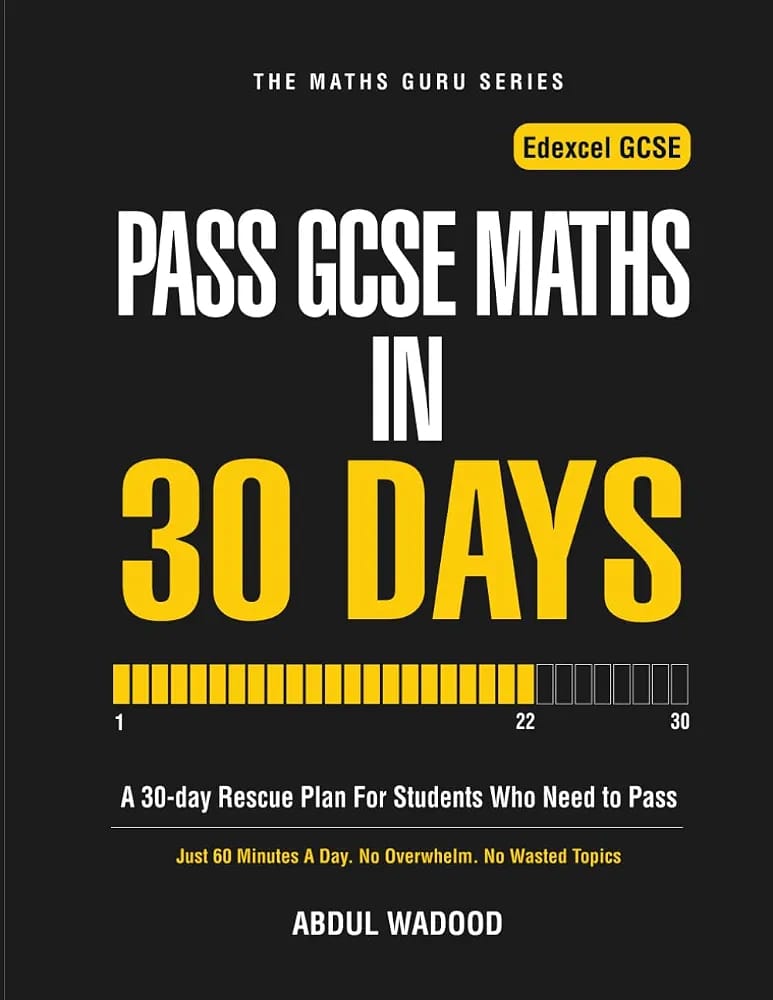
Pass GCSE Maths in 30 Days — Edexcel GCSE
Most students do not fail mathematics because they lack ability. They fail because they revise randomly, run out of time, and have no clear system when the exam approaches.
This book provides exactly that system.
Built on 25 years of teaching students who felt behind and overwhelmed, Pass GCSE Maths in 30 Days gives every student a structured daily plan that removes all the guesswork. Sixty minutes a day. Thirty days. One clear path to passing the Edexcel GCSE Mathematics exam.
Each day is structured around a single topic. The Guru Rule method gives one precise rule per topic so nothing is forgotten under pressure. The 5-Second Recall system builds instant memory tools for exam day. Exam trap warnings identify the exact mistakes that cost students marks, explained clearly so they are never repeated.
Two full Edexcel-style mock exams with complete mark schemes are included.
This is not a revision guide. It is a rescue plan.
▼
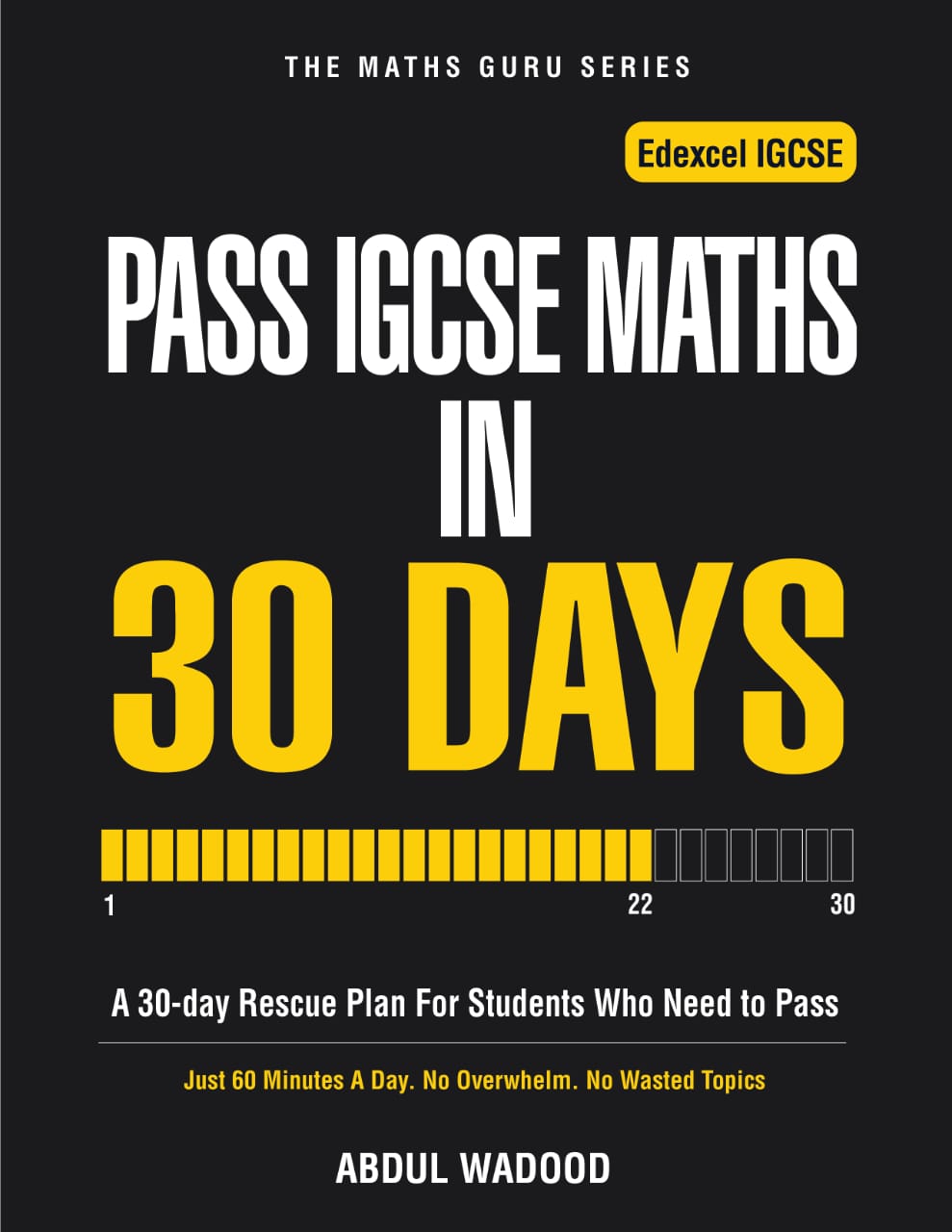
Most students do not fail mathematics because they lack ability. They fail because they revise randomly, run out of time, and have no clear system when the exam approaches.
This book provides exactly that system.
Pass IGCSE Maths in 30 Days for Edexcel IGCSE gives every student a structured daily plan that removes all the guesswork. Sixty minutes a day. Thirty days. One clear path to passing the Edexcel IGCSE Mathematics exam.
The Guru Rule method gives one clear rule per topic so nothing is forgotten under pressure. The 5-Second Recall system builds instant memory tools for exam day. Function notation and reciprocal graphs are fully covered. Exam trap warnings show the exact mistakes that cost students marks across Edexcel IGCSE Paper 1 and Paper 2.
Two full Edexcel IGCSE-style mock exams with complete mark schemes are included.
This is not a revision guide. It is a rescue plan.
▼
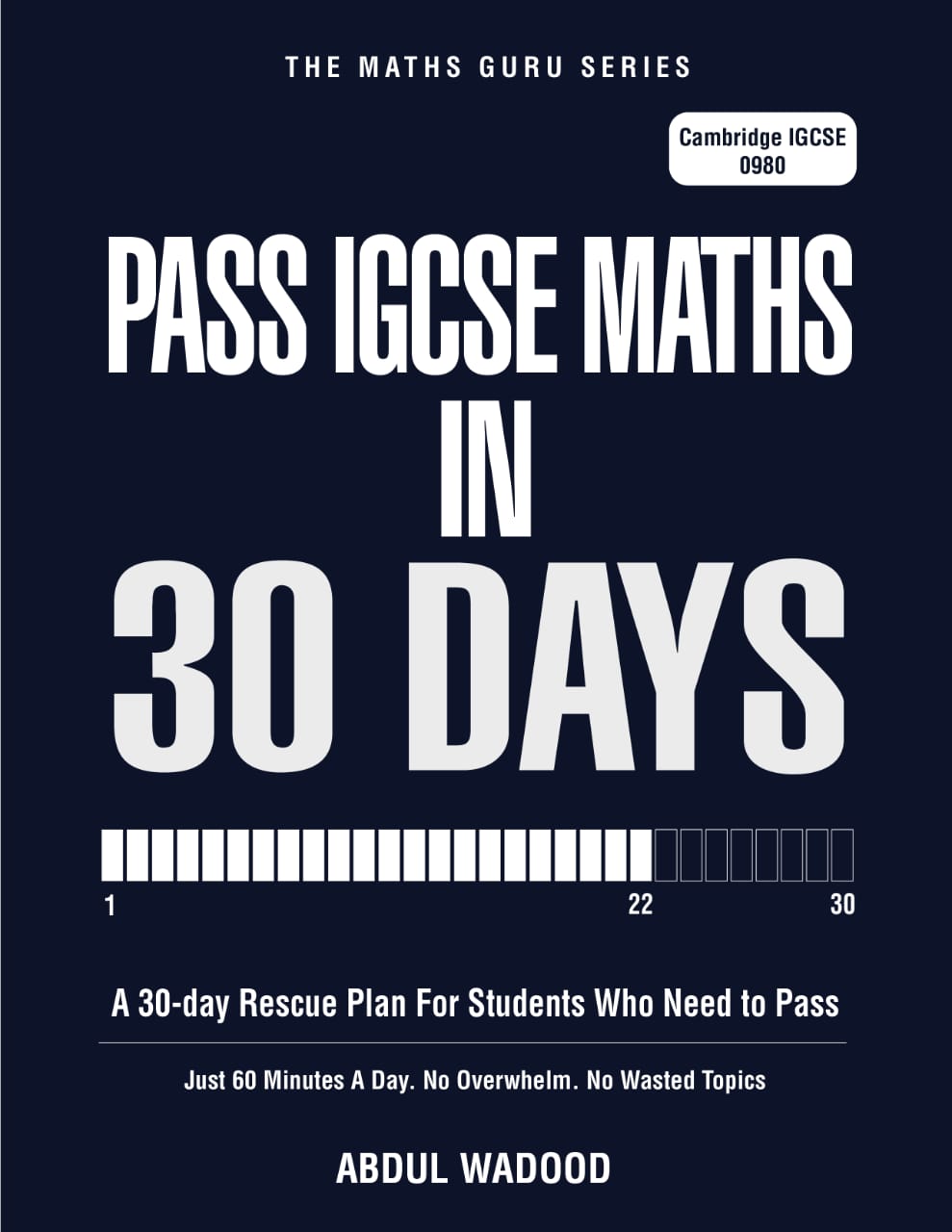
Most students do not fail mathematics because they lack ability. They fail because they revise randomly, run out of time, and have no clear system when the exam approaches.
This book provides exactly that system.
Pass Cambridge IGCSE Maths in 30 Days for 0980 gives every student a structured daily plan that removes all the guesswork. Sixty minutes a day. Thirty days. One clear path to passing Cambridge IGCSE Mathematics 0980.
The Guru Rule method gives one clear rule per topic so nothing is forgotten under pressure. The 5-Second Recall system builds instant memory tools for exam day. Bearings, reciprocal graphs, and function notation are fully covered. Exam trap warnings show the exact mistakes that cost students marks in Cambridge paper conditions.
Two full Cambridge-style mock exams with complete mark schemes are included.
This is not a revision guide. It is a rescue plan.
▼